.jpg)
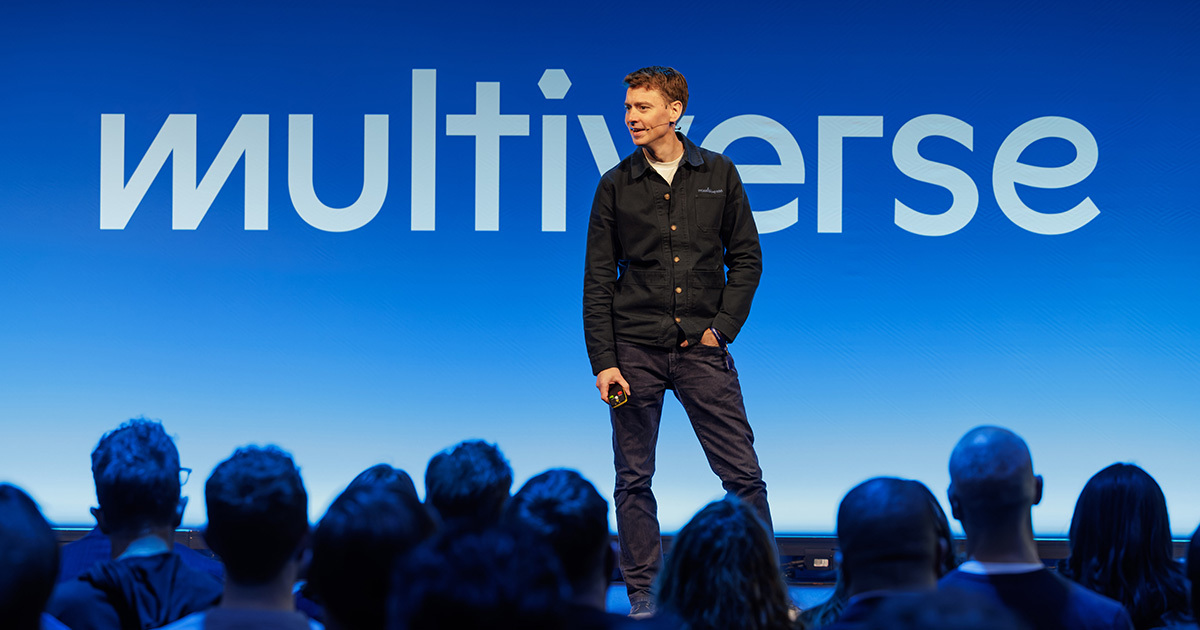
Earlier this month we announced the opening of Multiverse's new tech hub in Edinburgh, Scotland — and the leader who will build it. Colin Mackenzie joins as VP of AI Engineering, bringing a career that spans race car mechanics, professional magic, and building frontier AI systems at Amazon.
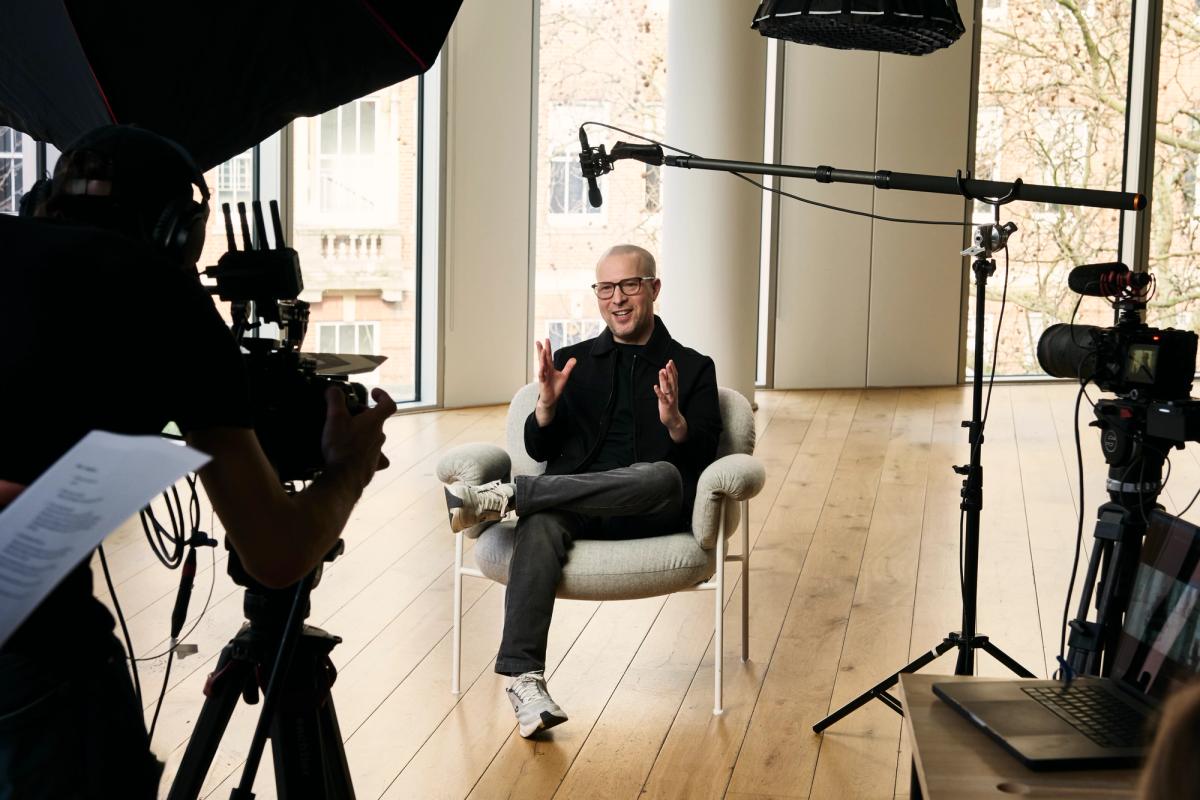
We sat down with him in his first weeks to hear about the journey that led him here, what he believes AI is doing to the engineering profession, and what he hopes to build in Edinburgh.
Tell us about yourself. You've had quite a career path…
It's been a relatively non-traditional journey. I started out as a mechanic and performance tuner, building Japanese race cars, later pivoting into being a full-time magician, picking pockets and hypnotising people around the world. A final pivot into tech saw me work across start ups, fintech and latterly at Amazon building out the generative AI products.
The thread through them all is engineering: mechanical, social, and software. They all require systems thinking, problem solving, and figuring out how to innovate.
The last chapter moved extraordinarily fast. Working with the team at Amazon, we were building frontier AI systems in ads before the generative AI wave really hit. Every technology shift I'd seen in the past few decades, I've experienced ten times over in the last two or three. It's been quite a ride.
AI is changing what's possible in engineering at pace. What's your take?
The biggest shift is the collapsing of roles. Traditionally, there were clear boundaries between designers, product managers and engineers, and a well-worn process for passing work between them. AI is dissolving and reimagining all of that.
Knowledge is no longer a moat. If you deeply understand how to build systems, AI now gives you the ability to think more like a product person, ask better customer questions, and experiment with design. And the inverse is true: a designer, with solid systems thinking, can now build scalable products they couldn't before. The people who will thrive are the ones curious enough to explore at those edges.
The cycle time has collapsed too. We used to talk about two-week sprints. Now you can ship new features on a daily basis, get real customer feedback, and iterate the same day again. If we can set ourselves up to move at that speed, we can build something genuinely differentiated.
If anyone tells you they're a generative AI expert, take that with a pinch of salt. The technology changes week in, week out. The only honest posture is a beginner's mindset. Keep being curious, keep pushing, don't stagnate.
You’ve spoken about building a learning organisation within a learning organisation. What does that mean to you?
I came up through a traditional apprenticeship as a mechanic. I was paired with a journeyman — an expert who taught me everything they could. I had two or three of those over the course of that career, and I absorbed the best of what each of them had to offer.
There's a trend in the market right now that worries me: the idea that AI can replace junior engineers, so companies stop hiring them. But if we stop training the next generation, we lose the pipeline of people who will eventually become the experts. We need to operate like a learning factory. Knowledge might be freely accessible now, but only experience teaches you how to apply it thoughtfully. Creating an environment to disseminate the hard-won experience of tenured engineers into the people earlier in their careers, in a structured, thoughtful way, is critical.
And it doesn't only apply to juniors. An exec who wants to get closer to design, an engineer who wants to understand the product side better — that model works for everyone when you have AI in the mix. The boundaries between roles are blurring. We should be helping people move across them.
What are you building in Edinburgh, and what excites you most about the mission?
The opportunity to build something in Scotland that has genuine economic impact — not just on this company, but on the next generation of builders and on the tech ecosystem. Edinburgh has a deep concentration of world-class engineering and AI talent. The universities are actively encouraging AI experimentation. There are ambitious companies already emerging here. It is a small city, but remarkably rich in the opportunities it offers.
What I want to build is a hub that attracts that talent, compounds over time, and becomes an employer of choice in Scotland. But I'm equally clear about what I don't want: an annex. I don't want Edinburgh to feel like a satellite office with a flag planted in it. Whatever we build here should be genuinely integrated with Multiverse as a whole — incubating ideas, levelling up skills, working as one team. If we get that right, I think we'll build something quite remarkable.




.jpg)