Every Multiverse apprenticeship is built around human coaching. This post explains the latest AI tool we've built and rolled out to help our instructors improve and create a great experience in every session, and the limits we've set on what the AI does.
Ask Multiverse learners what makes their programme work and most of them will talk about their team of coaches and instructors. Learners give our coaches a 97% satisfaction rating, and coaching quality is what we guard most closely.
That takes two things: a clear view of how every session goes, and delivering personalised, point-of-need development for every instructor. Until now, one constraint limited both.
The limits of a monthly observation
A Delivery Manager could observe each instructor about once a month. One session gives a narrow view. It can miss a problem that is building, and it gives little basis for development tailored to the person. Managers also spent much of their time gathering evidence, which left less for acting on it. Schools and training providers everywhere face the same problem.
"As a former teacher, I know how hard it is to build an observation system that helps people improve. In my first years in the classroom, I was observed once a month, with feedback based on a 20-minute snapshot of a single lesson. It always felt like putting on a performance, so the feedback didn't reflect what my lessons looked like day to day. Later, when I ran Delivery Enablement at Multiverse, I observed every member of the team once a fortnight. I loved giving that feedback, but I knew the approach couldn't scale. Compass is the result of nearly a year spent working on that problem. Every instructor now gets feedback based on how they teach in every session, and we have a much clearer picture of quality across all our programmes."
Chloe Barker, Senior Director, Quality, Multiverse
What Compass does
The Compass agent is an AI tool that reviews instructors' sessions against the Compass Framework, the skills required to deliver exceptional workshop-based training that we use to hire, train and develop every coach. Before, a manager could review one session a month. Compass reviews every session and combines what it finds with learner feedback.
It produces two things. First, a risk rating for each session, which shows managers where quality may be at risk so human managers can review the session and check if the concern is valid - acting quickly to remediate and mitigate if needed. Second, suggested development areas, which give each instructor individual feedback, with data drawn from across their teaching practice, not just a snapshot.
The first protects the standard learners and employers expect. The second helps instructors raise it. Neither is a verdict on anyone's performance.
Where people stay in charge
Our AI principles commit us to keeping a human in the loop and to AI that is open about how it works. We designed Compass around both.
Delivery Managers review what Compass produces, check it against what they know and decide what to do, if anything. The instructor and their manager agree development goals together. Compass is one important data point among many. Performance management rests only on human observation, and the tool makes no decision about anyone's job.
Rolling it out in stages
We've brought Compass in gradually, so that instructors understand it before it plays any part in their development.
- August: we built the reports and tested them with Delivery Managers only.
- September: we introduced the tool to instructors and explained how it works. Reports stayed visible to managers only.
- October: reports move into our internal coaching platform, where instructors will see the same information as their manager.
Later, we plan to use the same approach for learner progress reviews and for Cohort Coaches, and to link what Compass finds to the training we offer our coaches.
In rolling it out, we've reviewed and learnt from similar tools being rolled out across education, including academic research, Stanford's M-Powered Teachers, and IRIS Connect.
Part of a wider approach
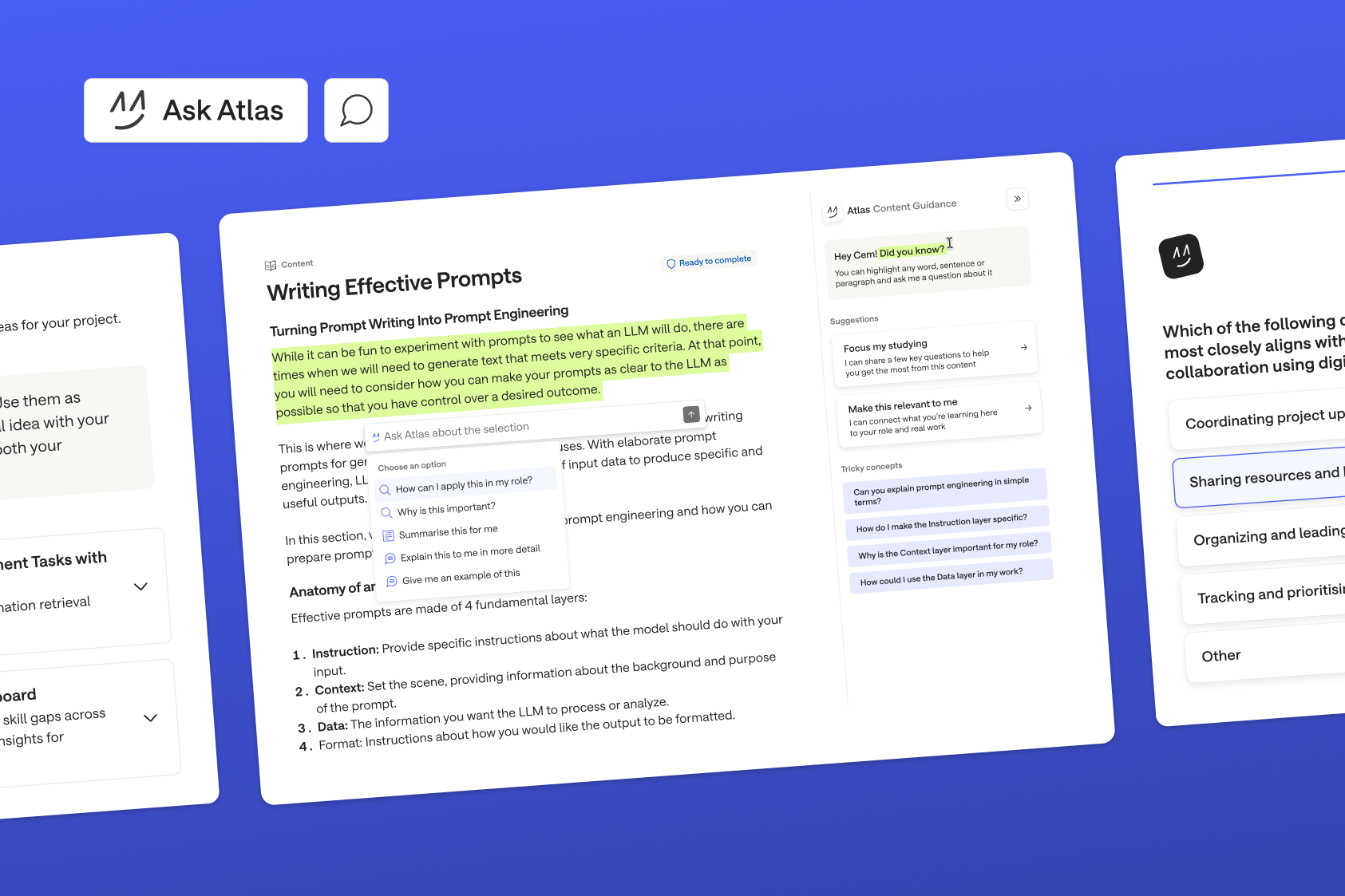
Compass follows the path we took with Atlas, our AI coach. Atlas now resolves 88.3% of routine support queries and has answered more than 1.5 million questions, with a 99% helpfulness rating from learners. The share of coach time spent on routine support has fallen from 41% to 18%.
That time has gone back into the work only people can do: mentoring, pastoral care and developmental coaching. We've also kept adding people, hiring 40 new coaches and instructors in a single quarter.
"AI adds real value in the flow of work, for time-constrained tasks and the urgent things you need help with right now. That work does not need a human doing it. But at the core of it, the human coaches are the ones who then have more time to work with learners on their goals, their ambitions, their values, what motivates them."
Kelly Griffith, SVP of Coaching & Delivery
Compass applies the same idea to how we develop our coaches and check their work: AI collects the data and takes a first pass through it, but people take a judgement, and then decide how to act.
What this means for learners and employers
Learners get sessions held to a consistent standard, with problems caught in days where a monthly observation might have taken months. Employers get clearer assurance about the quality of the coaching their people receive. Instructors get personalised development built on their real teaching, which is what keeps the standard rising.
Read our AI principles, or visit our Impact Hub to see how Multiverse coaching turns skills into results.

.png)

%20(1).jpg)
.jpg)