












We couldn’t find what you are looking for. Please try another way.
The Multiverse blog
Thank you! Your submission has been received!
Oops! Something went wrong while submitting the form.

The University of Manchester partners with Multiverse to build digitally confident and AI-literate workforce
News
Team Multiverse
The University of Manchester is launching AI and data programmes for 70 professional services staff through a new Data & AI Academy, in partnership with Multiverse. This new initiative is part of a drive from the University to better leverage its technology tools and data.
The development of these skills will increase staff efficiency through the automation of manual processes and future proof the workforce for the next decade. The ambition of the Data & AI Academy is to expand across the University’s professional services teams in 2025.
Training is funded by the apprenticeship levy and delivered by Multiverse, a tech company that specialises in high-quality training through applied learning. Multiverse has trained more than 16,000 apprentices at over 1,500 organisations in data, AI and digital skills since 2016.
Programmes include ‘AI for Business Value’, which will help learners to identify operational and commercial gains that can be achieved through using AI responsibly. This will allow them to design AI solutions with key areas like student experience and organisational development in mind.
The ‘Data Fellowship’ will upskill employees in data analysis and help the University develop a team of data specialists to implement its 10-year futureproofing framework. Meanwhile ‘AI Powered-Productivity’ will help teams to boost their output at work through the use of Microsoft 365 Copilot. This will be crucial to help deliver value from the University’s forward-looking investment in the technology.
According to Multiverse’s Skills Intelligence Report, the education sector is most impacted by a lack of data skills, with 38% of employees’ time working with data spent unproductively, compared to the average of 30% across 18 other sectors.
The University of Manchester’s Data & AI Academy will lead the way in mitigating this risk by offering tailored training programmes to enhance data analytics and AI skills among staff. This will foster a more data-driven workforce that can effectively leverage technology to improve student experiences.
PJ Hemmaway, Chief Information Officer at The University of Manchester said: “I’m thrilled to be partnering with Multiverse to offer these unique and highly relevant professional development opportunities to our colleagues. Together, we have developed an approach to increase our digital confidence around data and AI which will help us immensely to prepare for the challenges that lie ahead.
“Data and AI skills will be critical in the future and I’m eager to see the first cohort of colleagues upskill and learn how to harness the power of innovative technologies for the benefit of our University community and our student experience, as we prepare ourselves for what’s to come.”
Robert Williams, Apprenticeships Programme Manager at The University of Manchester said: “We are excited to join forces with Multiverse to introduce the Data and AI Academy, a dynamic addition to our growing apprenticeship offering at the University of Manchester. This partnership underscores our commitment to supporting staff development and highlights the vital role apprenticeships play in driving personal and professional growth across our institution”
Euan Blair, CEO at Multiverse said: “The University of Manchester is adopting a strategic approach to give its skilled teams more time, enabling them to concentrate on what truly matters. Already recognised as a leading institution for students, this new academy demonstrates its commitment to supporting employees as well.”
12 best jobs for introverts in 2025
Apprentices
Team Multiverse
But, how do you know if you’re an introvert or extrovert? This article will help you understand how to identify if you’re an introvert and explore some high-paying career options that could potentially suit you.
What is an introvert?
The psychologist Carl Jung invented the terms introvert and extrovert to describe two core personality types.
An introvert is a person who values and gets energy from internal reflection and quiet, calm environments rather than social interaction. It’s a misconception that introverts are shy or socially awkward.
Introverts can have excellent social skills, but unlike extroverts, they don’t get energy from interacting with others. After a lot of social interaction, they want to recharge with some alone time.
Introverts vs. extroverts: Skills, traits, and differences
While estimates vary, it's likely around 30-50% of us are introverts. Of course, you can have a mixture of introversion and extroversion, but most people identify with one more than the other.
A simple way to tell if you’re more introverted or extroverted is to consider how you feel at the end of a social event.
- Do you feel drained and eager to go home? You may be an introvert.
- Are you full of energy and planning for the next social event? You may be an extrovert.
Here’s a breakdown of the differences between introverts and extroverts to help you decide which careers fit your personality.

What makes a good job for an introvert?
Choosing a career that aligns with your personality can significantly impact your job satisfaction and overall well-being. For introverts, the ideal job often involves working independently or in small groups, with minimal constant social interaction. Introverts tend to thrive in roles with a clear structure and routine, allowing them to focus on individual tasks and projects. Jobs that offer flexibility and autonomy are also a good fit, as they enable introverts to manage their time and energy levels effectively.
Characteristics of introvert-friendly jobs
A good job for an introvert typically includes the following characteristics:
- Independent work: Introverts often prefer working alone or in small groups, with minimal supervision and interruptions. This allows them to concentrate deeply and produce high-quality work.
- Minimal group interactions: Since introverts tend to feel drained by large amounts of social interaction, jobs with limited group meetings and presentations are often a good fit. This helps them maintain their energy and focus.
- Focus on individual tasks: Introverts excel in roles that involve focused work on individual projects and tasks, with clear goals and deadlines. This allows them to leverage their strengths in problem-solving and attention to detail.
- Flexibility and autonomy: Jobs that offer flexible scheduling and autonomy are ideal for introverts, as they can manage their time and energy levels effectively. This flexibility helps them maintain a healthy work-life balance.
By seeking out roles with these characteristics, introverts can find a good job that aligns with their preferences and strengths, leading to greater job satisfaction and success.
15 best jobs for introverts who work independently
Introverts can perform well in any role. But, some careers have more opportunities for introverts to flex the skills that they excel at including:
- Problem-solving
- Analytical thinking
- Empathy
- Working independently
- Attention to detail
- Organisation
- Project management
Some of these roles are among the highest paying jobs, highlighting the financial benefits of pursuing such career paths.
In addition to being the best jobs for introverts, the following careers don’t always require a university degree. According to labor statistics, these jobs also offer competitive salaries and promising job growth.
You can pursue many of these through alternatives to university, including Multiverse apprenticeships.
(Note: the below salary data is sourced from London Glassdoor and United States Bureau of Labor Statistics job growth data.)
1. Data Scientist
Introverts who don’t mind math and analytical thinking might enjoy a Data Scientist career. Data Scientists require strong technical know-how to process and analyse data effectively. You’ll often need to communicate insights from your data analysis to leadership and stakeholders.
- Average salary: £54,115
- Job growth rate: 36%
- Similar job titles: Data Science Manager, VP of Data Science
2. Software Engineer
Many introverts choose the Software Engineer career path. It’s a high-paying job and you have opportunities to think about and creatively solve problems through coding. As a Junior Software Engineer, you’ll spend most of your time building applications and writing code.
As you move into leadership roles, you may spend more time communicating with clients or coaching other developers. Additionally, as Software Engineers advance in their careers, they may need to develop public speaking skills to present their work and collaborate with clients.
- Average salary: £66,813
- Job growth rate: 25%
- Similar job titles: Software Developer, Web Developer, Full Stack Developer, Back-End Developer, Front-End Developer.

3. Product Manager
Product Managers work closely with researchers, designers, and developers to create and manage products or features. They also need strong interpersonal skills to communicate with clients, stakeholders, and other teams. Part of the job is balancing customer needs and desires with business priorities.
Product Managers need strong organisational, project, and time management skills. They need to empathise with users and companies to solve problems. If you’re an introvert with those skills, it could be an ideal career for you.
- Average salary: £67,744
- Job growth rate: 9%
- Similar job titles: Industrial Production Manager, Product Owner, Solutions Manager
4. Data Engineer
Data Engineers are Software Engineers that focus solely on working with code and data. They typically work behind the scenes. Unlike Data Scientists, they don’t need to analyse data and present findings to executives.
To become a Data Engineer, you’ll need strong analytical skills and a database, analysis, and software engineering background. You’ll manage databases and may collaborate with Data Analysts and Scientists but will have the freedom to work alone often.
- Average salary: £51,159
- Job growth rate: 36% (based on Data Scientist projection from BLS)
- Similar job titles: Database Architect, Data Manager
5. Data Analyst
A Data Analyst career may also appeal to introverts because it requires skills like analytical thinking and problem-solving. Data Analysts spend most of their time working independently with data to solve real-world problems.
Multiverse’s advanced analytics apprenticeship can help you strengthen your data analysis skills and learn tools of the trade like Tableau.
- Average salary: £38,229
- Job growth rate: 23%
- Similar job titles: Data Scientist, Analytics Manager, Business Analyst
6. Content Marketing Manager
Content Marketing Managers help businesses grow by creating high-quality content for their target audiences. As a Content Marketing Manager, you’ll oversee the strategy and creation of content including blogs, landing pages, social media, or video. You may also manage teams of writers, editors, influencers, and content creators.
To succeed in this role, you’ll need strong analytical, writing, and editing skills. You’ll also need some communication and presentation skills, but most of the time you can take a behind-the-camera approach.
- Average salary: £43,918
- Job growth rate: 6%
- Similar job titles: Head of Content, Growth Marketing Manager, SEO Specialist
7. Cybersecurity Analyst
Introverts can apply their critical thinking and problem-solving skills to a cybersecurity career. Cybersecurity Analysts identify vulnerabilities in an organisation and implement measures to prevent cyberattacks.
Cybercrime evolves rapidly, so Cybersecurity Analysts must educate themselves continuously about the latest threats. As a result, this job may appeal more to introverts who enjoy solving complex problems.
- Average salary: £44,246
- Job growth rate: 33%
- Similar job titles: Information Security Analyst, Information Security Engineer, Penetration Tester, Cryptographer

8. Graphic Designer
Creative introverts often become Graphic Designers. As a Graphic Designer, you could create:
- Logos
- Social media templates
- Websites
- Brand books and guidelines
- Fonts
- Product packaging
Typically, Graphic Designers work with individual clients or small teams to develop and revise design ideas. However, they spend the majority of their workday creating art in solitude, often from the comfort of home.
- Average salary: £28,066
- Job growth rate: 2%
- Similar job titles: Graphic Artist, Digital Designer, Brand Designer
9. UX Designer
You might excel as a User Experience (UX) Designer if you’re an introvert that enjoys a mixture of focussed work time and group collaboration. It also helps if you have strong project management, design, and problem-solving skills.
As a UX Designer, you’ll audit and design websites and other applications to be user-friendly and accessible. UX Designers collaborate with product teams and other designers to create engaging user experiences.
- Average salary: £47,887
- Job growth rate: 8%
- Similar job titles: UX Manager, Digital Interface Designer, Information Architect
10. Cloud Engineer
Cloud Engineers usually gain expertise in specific cloud technologies like Amazon Web Services (AWS) and Azure. These make it possible for companies to share computing resources—databases, storage, software, and more—over the internet.
Cloud Engineers manage applications and data that live in the cloud. As a result, they often use programming languages like Python, PHP, Go, and Java.
- Average salary: £57,364
- Job growth rate: 11% (based on BLS “other computer occupations;” may be higher)
- Similar job titles: Cloud DevOps Engineer, Cloud Architect
11. Project Manager
Introverts who enjoy planning might consider becoming a Project Manager. Project Managers oversee teams and handle every step of project planning and execution. You can excel as a Project Manager by empathising, resolving conflicts, and motivating others to work toward a common goal.
- Average salary: £48,654
- Job growth rate: 7%
- Similar job titles: Project Administrator, Project Planner, Project Leader
12. Technical Writer/Technical writing
A Technical Writer translates complex ideas into accessible documents, such as instruction manuals, marketing plans, and white papers.
Introverts often perform well in this position because they can exercise creativity and dive deeply into research. Technical Writers spend most of their time planning, writing, and revising documents in solitude. Additionally, many people work remotely as freelance Technical Writers, which can provide even more freedom.
- Average salary: £43,088
- Job growth rate: 4%
- Similar job titles: Technical Communicator, Documentation Specialist, Content Strategist, Business Writer
Leveraging your skills and experience
Introverts often possess unique strengths and skills that can be highly valuable in various careers. By recognising and building on these strengths, introverts can find fulfilling and rewarding careers that cater to their preferences and work styles.
Building on introvert strengths
Some common strengths that introverts can leverage in their careers:
- Analytical skills: Introverts often excel in roles that involve data analysis, problem-solving, and critical thinking. These skills are highly valued in fields such as finance, research, and data science.
- Writing: Many introverts possess strong writing and communication skills, making them well-suited for careers ranging from technical writing, content strategy, and much more.
- Attention to detail: Introverts often have a keen eye for detail, making them well-suited for a range of careers.
- Independence: Introverts often prefer working independently, making them well-suited for careers in freelancing, consulting, and entrepreneurship. These roles offer the autonomy and flexibility that introverts thrive on.
By building on these strengths, introverts can find a fulfilling career path that aligns with their natural tendencies and skills, leading to greater job satisfaction and success.
Begin your career journey with Multiverse
If you’re interested in advancing your career, Multiverse can help you get started. As an apprentice, you’ll earn a salary, learn, and get a salary all without having to interrupt your current career.
Multiverse apprenticeships are free, but to be eligible, you must:
- Be at least 18 years old
- Have qualifications such as A-levels or NVQs
- Able to work in the UK
To get started, apply for a Multiverse apprenticeship. The Multiverse team will get to know you and reach out to discuss the best apprenticeship opportunities for you.

Skills Minister Jacqui Smith meets Multiverse apprentices
Employers
Ellie Daniel
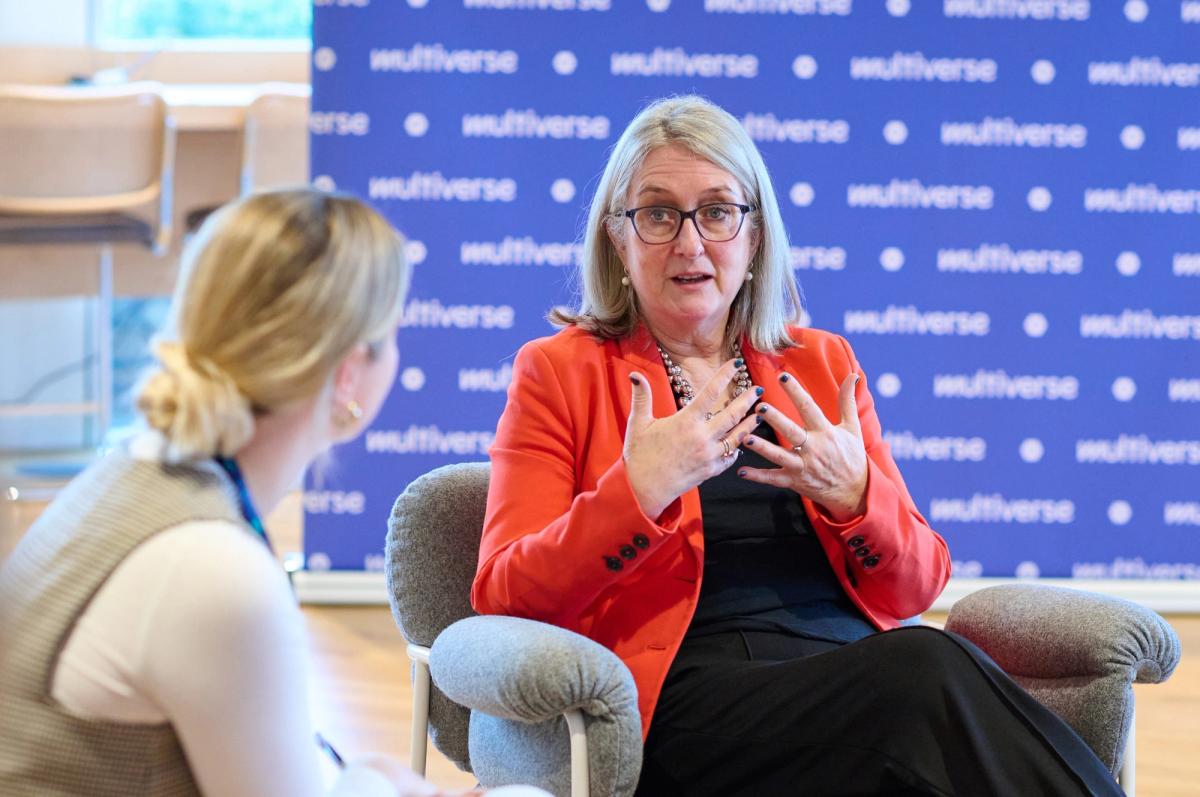
Last week at Multiverse, we were thrilled to host the Minister for Skills, Baroness Jacqui Smith, to discuss the future of apprenticeships and the role of AI. Baroness Smith met learners and alumni to hear their experiences of apprenticeships and what can be done to improve this crucial pathway even further.
“It’s been great to come to Multiverse and to meet some of the apprentices, who spoke to me about the opportunities that they found through apprenticeships,” said Baroness Smith.
Enhancing apprenticeships with technology
With the speed and scale at which skills gaps are emerging in the UK, it’s important to consider how technology can help to shape and deliver effective apprenticeship programmes. Baroness Smith joined CEO Euan Blair for a demonstration of how AI can enhance learning and improve outcomes.
“The world moves quickly, particularly in the area of technology, and we’ve got to make sure that apprenticeships are keeping up,” the Skills Minister reflected. “It’s been really great to see how it’s possible using technology here to personalise apprenticeships for both employers and for the learners, the apprentices, so they’re getting what they need, including support along the way.”

Apprenticeships for every age and every stage
Baroness Smith joined a roundtable to hear the experiences of apprentices, including their thoughts on how the format can evolve — particularly quickly enough to keep up with changes in technical skills.
One point of discussion was how to make apprenticeships suitable for every age and every stage — appealing to both experienced professionals and school leavers. The applied learning offered by apprenticeships delivers significant value for people starting their careers, but equally provides invaluable training for those further along their career journey, looking to reskill.

Some of the group used their apprenticeships to return to the workplace after a career break. Nadine, a Senior Analyst at Citi, applied to Citi's Reactivate Your Career programme and completed a Level 3 Data Technician apprenticeship with Multiverse after an 11-year career break to care full-time for a daughter with special needs. Through the programme, she’s upskilled in data analysis and technology, preparing her to succeed in the next phase of her career.
Others commented on the value of continuous learning: “I found it really heartening — and such a boost to my confidence — that you can still learn, whatever your age,” shared Shubhada Paranjape, Product Engineer at John Lewis Head Office.
Apprenticeships are designed to meet the needs of employers and individuals, which can vary significantly. The group explored ways to make programmes even more accessible by tailoring them to each individual and job role, such as through modular apprenticeships and shorter courses.
With the government exploring ways to introduce greater flexibility in apprenticeships through the Growth and Skills Levy, there may soon be more ways to shape personalised courses that deliver for employers and the wider economy.
The transformative power of apprenticeships
Apprenticeships in AI, data and tech skills can transform careers — and the roundtable attendees shared many positive experiences. As well as upskilling for their roles, several alumni have now established a habit of continuous learning, to futureproof their careers as technologies evolve.
The individual coaching provided during each apprenticeship was highlighted for providing support and advocacy. “My Multiverse coach really helped me with developing soft skills and confidence — it was so powerful to have a safe space to be honest and just say 'I'm struggling with this concept'", reflected Ryner Gold, Level 4 Software Engineering Alumni.
Given the benefits they had gained, the apprentices spoke to Baroness Smith about ways to increase the appetite for apprenticeships among learners and employers. Everyone agreed on the importance of challenging more traditional views around the relative merits of university and apprenticeships — and giving equal kudos to each route.
Engaging teachers and parents at the school stage, and employees and organisations at the professional stage, will help to improve the reputation of apprenticeships.

One former apprentice, Tasnem Chawdhry (Level 3 Data Technician Alumni) is using the confidence she gained during her course to speak with school leavers directly. "As an introvert, I could never have imagined myself stepping out of my comfort zone to connect with others,” she said. “Now, as a Multiverse ambassador, I visit my own school as well as other schools and colleges to inspire and encourage people to pursue apprenticeships.”
Solving skills gaps, fast-tracking careers
Apprenticeships are a powerful means of solving skills gaps for organisations and fast-tracking career growth for employees of all ages and stages. We’re grateful to Baroness Smith for joining us to discuss the future of apprenticeships and how the UK can continue to benefit from this valuable training.
Explore the proposed reforms to the Apprenticeship Levy and what the changes could mean for your business.
Hillingdon Council launches Digital Excellence Academy to enhance service delivery
News
Team Multiverse
Hillingdon Council is launching a new Digital Excellence Academy for 75 staff members, as part of a specialist upskilling drive. The project will help the council execute a new digital strategy to better integrate services and improve quality of life for the community.
By building its digital capabilities, the council is looking to empower colleagues to improve their efficiency with digital and data while utilising these new skills to inform better decisions for residents and enable financial sustainability.
Training is being delivered by Multiverse, a tech company that identifies, closes and prevents skills gaps, through personalised, on-the-job learning. Multiverse has trained more than 16,000 apprentices in AI, data and digital skills since 2016.
Hillingdon Council’s new Digital Excellence Academy will see 75 employees enrol onto programmes such as ‘Data & Insights for Business Decisions’, a Level 3 apprenticeship which covers core technical skills including cleaning, formatting and preparing data. ‘Transformative Leadership’, a Level 5 course, is designed to help employees build strong leadership foundations, manage high-performing teams and drive continuous improvement.
Multiverse’s Skills Intelligence Report found that more than a quarter of local government and council employees’ time spent on data-related tasks could be more efficient if skills were enhanced. Hillingdon Council is ensuring it is ahead of the sector status quo by making significant steps to enhance the digital skills of employees.
Matthew Wallbridge, Chief Operating Officer of Hillingdon Council said:“Our Digital Strategy sets out our vision to embrace technology to be more efficient and make it easier for residents to use council services, including supporting those who are unable to use technology. Upskilling our teams in digital and data is a clear demonstration of our commitment to this, and in driving positive outcomes for our community.”
Multiverse combines work and learning to unlock economic opportunity for everyone. It works with more than 1,500 organisations to close critical skill gaps in the workforce in AI, data and tech, through a new kind of apprenticeship.
Gary Eimerman, Chief Learning Officer at Multiverse, said: “We’re confident that Hillingdon Council’s Excellence Academywill both improve its services and create a culture of continuous learning, driving innovation within the organisation. Staff will be better equipped to understand and use data, leading to more effective and efficient service delivery.”
What is upskilling? Get paid to advance your career
Apprentices
Team Multiverse
Why does this matter? From the perspective of individual professionals, it means opportunity abounds to unlock a rewarding, lucrative career by harnessing the right new skills.
Individuals who engage in digital upskilling tend to earn more, experience increased job satisfaction, and progress further in their preferred career paths. Apart from these benefits, upskilling is becoming increasingly crucial to remain competitive in the job market throughout the next decade and beyond.
Interested in learning how you can future-proof your career without quitting your job? Then read on. Below, we'll cover the following:
- What is upskilling?
- Why is upskilling important?
- Benefits of upskilling
- How to Upskill in 2024
- Upskill with Multiverse and future-proof your career
What is upskilling?
Upskilling is the process of improving your professional skill set. It typically refers to the training involved when mastering new skills and technologies, such as tools, coding languages, or frameworks. The ultimate goal of upskilling is to broaden the depth of knowledge of your work, allowing you to take on more responsibilities and pursue career advancement opportunities.
Upskillers come from all ages and industries. They're usually professionals who want to progress in their current careers through continuous learning. Upskilling can be undertaken via structured learning on the job, studying and practicing on your own time, or a combination of the two.
Why is upskilling important?
Many companies undertake the task of training employees via dedicated upskilling programmes with the goal of developing more productive, innovative teams. But upskilling can also help employees themselves unlock significant economic and career benefits.
75% of employees who participate in an upskilling programme with Multiverse saw a salary increase since starting the programme.
Furthermore, research by The Department for Culture, Media and Sport (DCMS) shows upskilling is essential for job security. With 48% of UK businesses "recruiting for roles that require hard data skills,” the demand for employees with data skills is strong. Of the 48% of businesses surveyed, 46% have struggled to fill these roles over the last two years.
In other words: There aren't qualified workers to satisfy the spiking demand for next-generation digital skills at work.
Upskilling isn't just crucial for job security now. It will also help you future-proof your career over the next decade and beyond.
Take the fields of data analysis and AI as an example. DCMS data suggests the demand for data analysis will increase 33% by 2026. Meanwhile, Multiverse research suggests 81% of tech firm leaders expect to increase their investments in AI over the next three years.
Upskilling vs. reskilling: Understanding the difference
While both upskilling and reskilling aim to address professional skills gaps, they serve different purposes in professional growth:
- Upskilling: Focuses on enhancing and expanding existing skills within your current field to take on more advanced roles. For example, a marketing professional might upskill by learning advanced data analytics tools to create more impactful campaigns.
- Reskilling: Involves acquiring an entirely new set of skills to transition into a different role or industry. For instance, a retail worker might reskill to become a software developer by learning coding and programming languages.
Both strategies are critical for adapting to changes in the job market, whether you're looking to climb the ladder in your current career or pivot to a new one. Identifying your unique skill gaps will help you determine whether upskilling or reskilling is the right path for your goals.
For more information on whether upskilling or reskilling is right for you, check out our companion blog on the topic.
Benefits of upskilling
Those who upskill have the potential to earn more, excel in their career, and learn durable skills that can be applied on the job. Upskilling can future-proof your career, leading to greater job security, continuity, and satisfaction. Let's take a closer look.
Increase your income
According to AND Digital, more than a quarter of UK employees didn't receive promotions due to a lack of digital skills, and 10% missed a pay increase for the same reason. This highlights the importance of having the right skills for career advancement and earning potential.
1 in 3 professionals who upskill through Multiverse either received a promotion whilst on programme or within 6 months post-programme. Additionally, according to Multiverse’s ROI of AI report, 56% of workers receiving AI training are likely to negotiate for higher pay in the next 12 months.
Investing in your skills can directly impact your career progression and earning potential. You don't have to climb the career ladder in a traditional sense (i.e., advancing to management) to upskill and increase your salary. You can become a master in your field, progress to a senior specialist, and then command more money for your skill level.
As an example, consider the impact of seniority on Data Analyst salaries. The median Data Analyst in the UK is around £37,000. But Directors of Data Analytics with advanced skills and experience earn £95,000 on average before other incentives and bonuses. (Source: Glassdoor).
Experience job satisfaction
When you upskill, you can create meaning in your work. The increased purpose at work leads to higher engagement. According to Gallup, engaged employees are less likely to switch jobs, which indicates job satisfaction.
Job satisfaction is even likelier if you upskill in highly relevant areas to your existing role. For example, employees who feel their skills are irrelevant are ten times more likely to start job hunting. In this case, upskilling won't just mean more job satisfaction but more job continuity.
Increase your job security
As many as 85% of all jobs available in 2030 have yet to be invented, meaning they'll demand new skills. The future aside, 61% of businesses already feel limited "by an insufficient digital vision and strategy."
You need to upskill if you want to meet the existing demand and future-proof your career. Digital skills like data analysis and AI will be more in demand. Whether you upskill in these areas or in general, you'll likely experience more job security.
How to upskill in 2025
From choosing a goal to upskilling for free without quitting your job, here are five ways to advance your career in 2024.
Pick a goal
When upskilling, first define what you want from your work and life. Do you want a career that matches your interests? A role that offers work-life balance? Maybe you have a specific salary range in mind because you want to start a family.
Consider your answers carefully and use them to pick your goal. With your end goal in mind, you can plan and prioritise the steps needed. Plus, when you understand why you're upskilling in the first place, it's easier to stay focused — even if things get challenging.
Example:
Let's say your goal is to get a pay rise. You're currently a Junior Data Analyst. If you increase your skills, you'll be in a solid position to get a Senior Data Analyst role. That progression comes with a salary increase.
You choose to upskill through an Advanced Data Fellowship programme, which you can do alongside your work. You can get your promotion mid-way through the programme and meet your goal of a pay rise.
Research jobs of interest to you
If you know you want to upskill but need to clarify your end goal, do your research. Start with a brainstorming session and think about job titles, roles, or progression routes that appeal to you.
If you're unsure where to start, check out different career options for Upskillers and narrow down based on your interests. You can then research existing professionals in those fields through platforms like LinkedIn. That will give you an idea of what upskilling steps you need to take.
Example:
It's been a few years since you progressed from a Junior to a Senior Data Analyst. Your new career goal is a different role in a similar field. You remember a former colleague who pivoted from a Senior Data Analyst to a Business Analyst position.
The idea has always stuck in your mind, but you need help figuring out how to switch roles. You head to LinkedIn to revisit your old colleague's professional profile. You then double-check the skills and certifications they have that are relevant to their Business Analyst role.
Chat with someone in the field
One of the fastest ways to understand something is to talk with someone with real-life experience in that area. In the case of upskilling, this involves finding a mentor you can chat to about your next steps.
When you find a mentor, you can ask them how they went from A to B and what specific skills they need for their current role. If you don't have an existing colleague or professional in mind, consider joining professional communities or groups. You can find these groups on LinkedIn for free or join paid Professional Slack communities.
Example:
As a Senior Data Analyst considering a pivot into Business Analysis, you reach out to your old colleague through LinkedIn. You meet for a virtual coffee and learn how they pivoted from data analysis to business analysis. They upskilled with a Business Analyst apprenticeship and had a new role with higher pay in just over a year.
Start a project
A real-world project will help you practice and develop skills to meet your career goals. You could start a personal project in your own time or volunteer for a relevant project at work.
If you choose the latter, consider speaking to your Line Manager about your upskilling goals. They might have a relevant project you can get started on straight away. Doing this also keeps you top of mind for progression opportunities that match your career goals.
Example:
After researching your colleagues' professional skills and speaking to them directly, you're sure you want to become a business analyst. You have enough data analysis experience but never had to present your findings to stakeholders.
Your colleague mentioned that presentation skills are a critical difference between data and business analysts. So, you set yourself a personal project to practice your presentation skills. You decide to focus on presenting your data insights in a way that shows real-world business potential.
Upskill at no cost with Multiverse without quitting your job
Future-proof your career with Multiverse’s upskilling programme. This programme provides a structured curriculum and personalised coaching to help you achieve your unique career goals. You’ll develop versatile and transferable skills that enable you to adapt to changes in your industry.
Unlike other programmes, the upskilling certification has no opportunity costs. Our on-the-job training programme is designed to fit the schedules of busy working professionals so you can keep working full-time while you learn. It’s also totally free with no strings attached.
Upskill with Multiverse and future-proof your career
There’s never been a better time to upskill for the future. Emerging technologies like artificial intelligence, big data, and cloud computing are reshaping industries and driving innovation. Learning how to use these cutting-edge tools can help you keep up with the ever-changing digital landscape and advance your career.
Multiverse’s upskilling programmes are the ideal way to upgrade your toolkit without sacrificing your current career for costly formal education. We offer training in critical skills like advanced analytics and technology consulting. Our programmes will help you enhance efficiency, gain marketable skills, and save money. Get in touch today to learn more.
Product craft at Multiverse
Life at Multiverse
Robbie Tilleard and Tanja Krawetz
We’re ambitious about the impact we want to create, and a key part of this is Multiverser’s development. With competency mastery at our core, we recently refreshed how we think about Product Management as a craft. Today, we’re sharing our new internal framework for Product Managers (PMs) at every level at Multiverse.
Our goal for the framework is that it’s fair, actionable, and measurable. It should create a pathway for great Product Management through clear expectations, speak to every aspect of the product development lifecycle, and help PMs—and Multiverse—grow.
The evolution of Product Management at Multiverse
Our team has experience across the spectrum—from seed-stage startups to public companies, including Google, Spotify, Meta, Hubspot, and more. With this wealth of knowledge, we initially adopted a simple way to understand Product Management: by asking four key questions (4Q) that focused on impact, speed, product expertise, and leadership.
- Are you achieving impact? It all comes down to this. You need to build software our users want and love.
- Do you ship at pace? We’re a scale-up and still have a lot to build. We need to be nimble and build fast.
- Are you the expert on our user and product? The more you understand user needs and the product, the higher the chance of building the right tools and features for impact.
- Are you leading and motivating your team, stakeholders, and organisation? If everyone shares the same mental model of the user and business goals and is excited about what you are building, the faster you can ship.
This simple rubric served us well during our rapid growth. It helped ensure that PMs delivered for users, shipped at a pace, and led their teams effectively. However, as Multiverse grew to 800+ employees and our product team matured, we needed something more robust.
Introducing our new competency framework
Our new framework uses the Driver Tree approach—a more dynamic, outcome-focused way to align every PM’s growth with business impact, rooted in the original intentions behind the 4Q approach. The Driver Tree links each category of competencies— shipping, mastery, and leadership—directly to role-specific expectations, making it clear how PMs at each level can create user value by driving the product's and the business's success.

The framework avoids ambiguity by detailing the skills required at every role level. As PMs progress in their careers, they take on greater responsibility and more complex problem spaces. The framework will help them navigate this progression by clearly defining what success looks like at each stage. PMs can assess their standing and provide clear, concrete examples of what is expected at each level.
Try the framework yourself
We’re excited to open up this framework for anyone to use. Take a look at it here, make a copy, and feel free to adapt it to your teams. As Multiverse continues to grow and evolve, so will this framework. We welcome any feedback and look forward to hearing how it works for you.
Introducing our new Disabilities @ Multiverse ERG Chair
Life at Multiverse
Meelie Thorpe
ERGs are groups created for employees and led by people who share common life experiences or identities. Typically, these groups are comprised of people within communities that have been historically and systemically marginalised.
ERGs provide support and safe space for underrepresented and/or marginalised communities. They help employees in their professional development, increase engagement and retention, and drive towards organisation-wide goals. Disabilities @ Multiverse is a community for those who identify as having an apparent, non-apparent, short term, long term disability and/or identify as neurodivergent. Our ERG is open to all employees who are passionate about creating an inclusive workplace for individuals with disabilities.
We sat down with Meelie Thorpe, Apprentice Support Executive based in our London and the new Disabilities @ Multiverse Chair, to talk about her new role.
What inspired you to run for Chair of Disabilities @ Multiverse?
My incredible colleagues who form the heart and soul of Multiverse inspired me to run for Chair. I am continually excited by the idea of creating a vibrant space where we can all share, connect, and enjoy the company of people who experience the world in a similar way. For me, it's essential that this community encourages connection and sharing, but also advocacy and learning. I’m passionate about having a tangible, positive impact on our employee experience!
What is the main goal of your ERG?
My main goal of the ERG is to cultivate an inclusive and empowering environment for employees with disabilities and allies, promoting awareness, support, and career growth opportunities within the company. Our aim is to enhance workplace experiences and create an equitable and inclusive community where disability can be celebrated! Conscious inclusion is at the heart of everything we do.
Why do you think the ERG is important?
For me, it is important to make meaningful contributions to creating an equitable and inclusive experience for all employees. The barriers that people with disabilities face in society mean that often we do not have the same opportunities as our peers. The ERG is an important step towards bridging that gap, and creating a safe space for members to contribute to the growth and development of employee experiences at Multiverse.
What are you proud of achieving so far?
So far we’ve already had amazing opportunities to share through our quarterly events and monthly meetings.
In September we put on an internal roundtable titled: Voices of Strength: Creating Accessible Spaces at Multiverse. Which we put on to provide a platform for employees with disabilities to share their experiences, insights, and discuss key topics related to workplace inclusion, accessibility, and support.
And in celebration of International Day of Persons with Disabilities in December, we’re putting on a series of events:
- A neurodiversity champion workshop.
- An inclusive manager workshop.
- And a session on making our product (even) more accessible.
If our commitment to diversity inspires you and you wish to be a part of a company that invests genuinely in its people, we would love to have you on board. See live roles.
What is a Skills Matrix? [Download free example template]
Employers
Claire Williams
As many as 25 days a year are lost to data skills gaps according to Multiverse research.
A skills matrix can help map these gaps and give leaders direction on what action to take.
In this article, we’ll explore what is a skills matrix, how to use one, and best practices for creating your own.
What is a skills matrix?
A skills matrix maps employees’ skills onto a grid with each person rated for proficiency, helping leaders understand how well different teams or a whole workforce can perform specific tasks.
The exercise helps identify skills gaps and growth opportunities for current employees while acting as a roadmap for a wider skills strategy.
A skills matrix is different from a competencies matrix. A competency matrix looks broadly at attitudes, knowledge, and behaviours, whereas a skills matrix focuses purely on skills.
What is a skills matrix used for?
An estimated 11% of the working week is lost to data skills gaps, according to the Multiverse Skills Intelligence Report. But by mapping the gaps using a skills matrix business leaders can:
- Create well-rounded teams with complementary skills – putting the right people in the right place.
- Track progress in skill acquisition over time, with success measured against business goals.
- Support the case for employee training programmes and upskilling.
How to use a skills matrix
A skills matrix is based on data, helping you make better decisions about placing the right people on the right projects.
If information is lacking – for instance when a company has no central record of the skills available – it’s harder to make the best choices.
So, alongside a skills matrix, the best practice is to build a skills inventory – which digitally documents all the capabilities in a company.
Using this foundation, a skills matrix can assess the strengths and weaknesses of individuals, teams or departments – scored against company goals.
By comparing available skills, it helps you make informed decisions about employee training, resource allocation and hiring.
And because it’s grounded in data, you reduce the need to make skilling decisions based on guesswork or industry trends.
Skills matrix example – free template to use
Below is an example of a skills gap matrix – mapping out the desired skills with scoring for where an employee is today and the ambition for the future.

What should be included in a skills matrix?
When used as part of a skills gap analysis, an effective skills matrix will bring together several elements beyond the table of desired skills scored against a proficiency scale.
Here are five best practice points for using a skill matrix:
- Create a skill taxonomy: Follow a structured list of skills defined across all departments, as part of a skills inventory. Standardising the language makes it easier to measure and track progress.
- Calibrate skills matrix proficiency scales: Make sure these reflect business needs and with clear progression across different levels. This ensures consistency when used across the business.
- Integrate with HRIS (HR information systems) and skills assessment tools: Make your skills matrix a live document, allowing for continuous monitoring with updates made in one central place – helping you track progress and prove ROI.
- Workforce planning: Use predictive analytics to assess future skill needs with strategic workforce planning. Identify opportunities for upskilling/retraining the existing workforce and ensure efforts create immediate business impact, not just provide an employee benefit.
- Foster a culture of continuous skill development: Encourage employees to take a stake in their progression while showing how they can make an impact on business goals.
Using a skills matrix to prevent skills gaps
When demand for AI and data skills is growing, leaders looking to the future can benefit from mapping their current skills gaps using a skills matrix.
The time to act is now: 90% of employees want to improve their data skills, according to the Multiverse Skills Intelligence Report
Rider Levett Bucknall launches Data & AI Transformation Academy
News
Team Multiverse
Leading built environment consultant, Rider Levett Bucknall (RLB) UK & Europe has launched a Data & AI Transformation Academy, designed to digitally upskill its team and leverage innovative data solutions, providing an enhanced service offering to clients.
Established to reinforce RLB’s positioning as a leader in data-driven construction consultancy by harnessing the power of data analytics and research, this academy plans to offer a continuous learning programme to RLB employees across the UK and Europe. RLB will look to launch additional cohorts every six months to maximise impact for clients in the face of rapidly changing technology.
RLB has partnered with tech leader, Multiverse, which provides personalised, on-the-job learning. RLB’s academy features programmes like the 13-month ‘AI for Business Value’ programme, and the Data Fellowship, a level 4 apprenticeship programme. Learners will gain hands-on training in AI implementation and business intelligence tools, fostering a future-ready, data fluent culture, with apprentices taking part from teams including cost management, sustainability, built asset consultancy and project management.
Matt Sharp, Chief Digital Officer at RLB said: “This academy lays the foundation for transforming the skills of our team and the service offering to our clients. As our business, projects, clients, and industry undergo significant digital and data transformation, it is crucial that we equip our people with the necessary digital and data skills. With more data at our disposal, RLB needs individuals who can unlock its potential and tell compelling stories through data.”
Susan Nelson, Digital Change and Adoption Manager at RLB said: “By launching this programme, we’re building a data-fluent culture. This will drive digital innovation and agility, preparing our team to shape the future of construction and property management consultancy.”
Gary Eimerman, Chief Learning Officer at Multiverse said: “RLB is cementing its position as a sector pioneer by equipping employees with vital business efficiency tools. Our research shows that the construction industry struggles with a data skills gap. Closing this will have a profound impact, accelerating project timelines and reducing errors; even helping to better measure and improve the sustainability of building projects.”
How to calculate ROI of employee training in 5 steps
Employers
Claire Williams
Skills are viewed as crucial to future business success. According to Multiverse research, more than two thirds (69%) of leaders believe their organisation will need different workforce skills to stay competitive by 2030.
It’s no surprise that businesses are upping their investment in learning as a result, with some 77% of leaders predicting their learning and development budget will increase by 2030.
Artificial intelligence (AI) is another driving force. As leaders push their organisations to adopt AI, workforce skills shortages are slowing progress – or even stopping AI initiatives in their tracks entirely. Tech leaders name skills gaps as a top blocker to AI implementation, with half of organisations planning to plug the skills gap with training as a result.
With these forces already in motion, HR leaders will face growing demand to show proof that employee training initiatives are delivering real business impact – and measurable ROI.
In this article, we will explore five simple steps for calculating the return on investment of employee training, helping you measure impact and make the case for future spending.
Understanding ROI in the context of employee training
ROI is a financial metric that measures the profitability of an investment by comparing the net gain or loss to its initial cost. A ROI calculation helps business and HR leaders evaluate the effectiveness and value of learning and development initiatives.
As well as validating the use of training time and budget, calculating ROI helps businesses to monitor the effectiveness of training programmes, and connect training with wider business goals.
Step 1: Set clear employee training objectives
Before launching any new employee training or upskilling initiative, clearly define what you want to achieve, and the metrics to measure success.
Wherever possible, align all learning programmes with strategic priorities and business outcomes. For example, an outcome could be: implementing an AI strategy, boosting productivity, or improving employee retention.
Next, assess the barriers that prevent you from achieving these aims, such as low employee satisfaction, low adoption rates for new AI tools, or high turnover rates for data specialists.
Then, agree on the metrics you will track to measure changes to these outcomes. Increasing productivity, for example, can be measured by looking at output per employee, the time saved on tasks, or quality improvements.
If addressing specific skills gaps, such as the AI example mentioned above, conducting pre- and post-training employee skill assessments can help you further benchmark and measure success.
Step 2: Work out the costs of employee training
Tallying up your costs will come from two different sources. Firstly, direct costs include the payment for any training materials, an external trainer or supplier if you used one, and any venue or equipment charges.
Secondly, indirect costs come from the time employees spend away from their daily tasks to complete the training.
Step 3: Map the tangible and intangible benefits of employee training
Here, the benefits split into two categories:
- Tangible benefits include productivity gains, employee retention improvements, and any cost savings created by employees using their new skills from the training programme.
- Examples of intangible benefits are enhanced collaboration, improved confidence, and an increased potential for innovation – which can be measured through methods like employee surveys or testimonials. Keep these in mind for reporting back (see step five).
Step 4: Run your ROI calculation
When going through this exercise, consider how to balance any short-term costs with the long-term benefits. A typical ROI formula looks like this:
ROI = (Benefits of employee training, minus costs) divided by costs x 100
For the clearest ROI figure, include the metrics which can be quantified. Usually, this is monetary: it can be measured against both the inputs of time and cost, as well as the outputs, such as increases in revenue and productivity.
Step 5: Tell a story when reporting results
Now it’s time to communicate the impact. After running the ROI calculation, don’t forget about the intangible benefits you recognised: they form a crucial part of the story to tell.
Make sure your metrics and objectives line up with the business objectives, visualise your data to make it more digestible, and include qualitative data such as employee testimonials to add colour.
Be transparent about any challenges to help inform future plans. What did you learn, and what could change next time to improve ROI?
Case study example: Jaguar Land Rover
Let's look at how Jaguar Land Rover measured the impact of its upskilling efforts. The company had three objectives:
- Equip employees with the knowledge and skills needed to identify opportunities to reduce costs and increase revenue.
- Build a data-driven culture that knows how to apply and leverage data in various scenarios – with the goal of increasing productivity and efficiency across the business.
- Increase employee satisfaction and engagement by investing in skills development.
Jaguar Land Rover launched the Multiverse Data Fellowship programme to equip employees with the skills needed to become experts in data analysis, modelling and machine learning. Currently, there are 600 employees in the programme across every department.
After assessing the ROI of the employee training programme, JLR found that learners had:
- Identified new opportunities to increase efficiency
- Increased productivity
- Increased employee satisfaction
Read the full story here.
Linking ROI with the bigger picture
Calculating the ROI of employee training is not just a financial exercise – it's a powerful way of advocating for further training initiatives.
By showing the real benefits of past training, HR leaders can make a compelling case for additional investments in employee development – especially given today's urgent demand for workforce AI skills.
Get in touch about your skills transformation today.
Sorry, no results found.